
Commercial Property Maintenance in Greater Vancouver: What Sets a Real Maintenance Partner Apart

Managing a commercial property in Greater Vancouver means managing the rain, the leaves, the labour market, and the expectations of tenants who see the grounds every day. For property managers, facility managers, and building owners, these constant demands mean commercial property maintenance is not a line item you can set and forget. Instead, it is an ongoing operational relationship—one where the quality of that relationship directly impacts tenant satisfaction, board reports, and how your site holds up on the worst weather day of the year, not just the best one.
To help you navigate these demands, this guide walks through what a comprehensive maintenance program actually includes, why North Shore conditions require a completely different approach than a property in Surrey or Langley, and what to look for when evaluating a partner to take on your site.
What Commercial Property Maintenance Actually Covers

A one-person crew with a mower and a truck can handle a residential lawn; a commercial site is a different scope of work entirely. Proper commercial property maintenance services cover grounds care, lawn and turf maintenance, garden bed upkeep, hedge and tree work, irrigation management, snow removal, seasonal clean-ups, and waste removal—all delivered on a schedule a property manager can plan around and report on. Whether you call it property maintenance services or grounds management, the actual work is the same: a documented, recurring program rather than a one-off visit.
Accountability & Reporting Standards
The biggest difference between commercial and residential maintenance isn’t just scale, it’s accountability. A homeowner can live with an inconsistent mowing schedule; a strata council, a facility manager reporting to a board, or a property manager fielding tenant complaints cannot. Commercial sites require higher operational standards because a well-kept exterior keeps tenants happy and protects lease values, and because ownership expects detailed reporting on every visit.
Tailoring to Local Conditions
North Shore and Coquitlam sites add another layer. Properties here deal with heavier rainfall, steeper terrain, and denser tree canopy than a comparable site in Surrey or the Fraser Valley. Maintenance frequency and scope must be tailored to these unique conditions rather than a generic, one-size-fits-all approach. For example. a moss problem on a shaded North Vancouver slope isn’t the same maintenance item as turf care on a flat, sun-exposed lot elsewhere in the region.
Lifecycle Care Under One Roof
Look for a commercial landscape maintenance company that stays with your property all year. Spring cleanups, growing season maintenance, fall preparation, and snow and ice removal once the weather turns. One partner, one point of contact, twelve months a year. That way you are not scrambling to line up a separate winter contractor in November, and you are not explaining your site to someone new every time the season changes. A year-round partner already knows where the drainage issues are, which walkways ice over first, and what your ongoing commercial maintenance schedule needs to cover.
That continuity matters more on a commercial site than most people expect. A residential yard has one owner making decisions on their own timeline. A commercial site usually has a property manager, a board or ownership group, and sometimes a head-lease tenant, and each one notices different things. A cracked walkway in July and an unsalted entrance in January land on the same desk. When two different contractors are responsible for those two problems, the gaps show up in the reporting and the follow-through. One company covering the full year means one standard, one schedule, and one person to call when something needs attention.
ScaLed Equipment & Commercial Scheduling
Equipment and crew sizing also scale differently than most people assume. A four-acre business park with multiple building entrances, loading areas, and parking islands needs a crew that can move through the site efficiently without leaving gaps in coverage, and it needs equipment sized for larger turf areas and taller hedge lines than a typical residential property. Scheduling has to account for tenant hours too. A retail strip on Lonsdale can’t have crews blocking a customer entrance during peak hours, and an office park in Burnaby has different quiet-hours expectations than a standalone industrial site. None of this is complicated, but it does require a contractor who has actually run commercial accounts before, not one applying a residential mindset to a larger property.
Why Commercial Clients on the North Shore Have Specific Needs

Microclimates & Rain Patterns
North Vancouver and West Vancouver aren’t interchangeable with the rest of the Lower Mainland when it comes to grounds care. While anyone searching for commercial property maintenance Vancouver-wide will find plenty of options, but a landscaping company North Vancouver property managers can actually rely on must understand North Shore conditions specifically.
Metro Vancouver averages roughly 1,153mm of rainfall annually, and a disproportionate share of that lands on the North Shore and Coquitlam. Here, mature tree canopy generates significant leaf fall and any commercial properties also sit adjacent to greenbelts or steep slopes. These unique factors require specialized debris management rather than a standard weekly clean-up.
Neighbourhood Constraints & Layouts
Commercial properties across the district aren’t uniform either. Lonsdale’s retail corridor, Burnaby’s office parks, and the large strat complexes around Langly and Surrey all carry different foot traffic patterns, visibility requirements, and site constraints than a commercial lot elsewhere in the region. Some clients also operate properties that stretch between the North Shore and the Sea-to-Sky corridor toward Squamish and Whistler, and want a contractor who already understands coastal mountain conditions rather than one learning them on the job.
Labour Shortages & Crew Turnover
There’s also a labour reality that’s worth being direct about. The Lower Mainland has a chronic landscaping labour shortage, and turnover on a maintenance crew creates inconsistency that shows up fast on a commercial site: missed details, uneven quality, and a new crew having to learn a property’s layout from scratch. Eco’s BC Living Wage certification is one of the ways we keep a stable, experienced team on the job, which matters directly to commercial clients who depend on consistency more than a low quote.
Mixed-Use & Strata Boundaries
Hire a company that specializes in commercial and strata landscape maintenance, not a generalist that offers it alongside everything else. It matters most on mixed-use properties, where strata boundaries rarely line up with what the grounds actually look like. The retail frontage, the residential entrance, and the shared visitor parking can each fall under a different owner, and none of that is obvious from the curb.
At Eco Property Maintenance, commercial grounds care is not a division. It is the whole business, and our crews are trained specifically for commercial and strata sites, so they know what a property manager needs to see and what a board will ask about. Strong strata maintenance services depend on a scope that maps those boundaries from day one.
Slope Drainage & Debris Flows
Slope management deserves its own mention. A meaningful share of commercial properties sit on grade, sometimes steeply, which changes how debris moves through a site during heavy rain. Leaves and organic matter wash downhill directly into drainage channels and catch basins. If a maintenance program ignores this, the result is clogged drains and standing water at the worst possible moment—typically during peak fall leaf season. A contractor working North Shore sites needs to build drainage and debris clearing into the standard scope, not treat it as an add-on that gets billed separately after the fact.
Greenbelt Proximity & Fire Risk
The proximity to greenbelt and forested land also brings wildlife and vegetation management into the conversation in a way that’s less relevant to a downtown Vancouver commercial lot. Overgrown vegetation near a property line can become a liability concern, both for sightlines and for fire risk during dry summer stretches, and a maintenance partner who understands the North Shore’s specific ecology is better positioned to flag these issues before they become a problem a property manager has to explain to ownership after the fact.
Wildlife Management
Once a coyote or black bear finds food on your property, it comes back, and that lands on your desk as a liability issue before it is a wildlife one. Bylaws cover the bins, but fallen fruit, litter in planting beds, and grease near a restaurant tenant’s back door all keep a site on the route. Overgrown shrub beds compound it, giving coyotes cover to den and cutting sightlines at the corners where a resident or tenant is most likely to meet an animal up close.
Weekly service from a landscape maintenance professional is what makes prevention work. Clearing vegetation around bin enclosures, removing fallen fruit, picking litter, and pruning for sightlines take away the reasons an animal returns. A site cleared once is attractive again in three weeks, and the record of that regular work is what you need in hand when a board asks what was being done.
What to Look for When Hiring a Property Maintenance Company
Not every landscaper who handles residential accounts can take on a commercial site. Commercial work requires different scheduling discipline, different equipment capacity, and a different standard of accountability. Property managers comparing property maintenance companies for a commercial account are rarely comparing like for like, since many firms doing commercial landscaping work in the Lower Mainland are really residential outfits that have taken on a larger site without adjusting how they operate.
Operational Standards
Experience with commercial-scale sites. Ask directly how many commercial accounts a contractor currently services, and for how long. A crew accustomed to weekly residential stops may not have the systems in place for multi-visit weekly schedules across a large commercial footprint. At Eco Property Maintenance, we have large crews on site weekly that are assigned quadrants of the property to focus on, so nothing gets missed.
Insurance and WorkSafeBC coverage. Any reputable contractor should produce a WorkSafeBC clearance letter without hesitation. If a contractor is slow or evasive about proof of insurance and coverage, that’s a signal worth taking seriously before a contract is signed, not after an incident.
BC Living Wage certification. This isn’t a marketing badge. A contractor holding BC Living Wage certification signals that it retains skilled, experienced employees rather than cycling through low-cost labour, which translates directly into consistent service quality and far less risk of turnover disrupting your contract mid-term.
A clear, written scope of work. Vague contracts create disputes. A serious commercial maintenance company documents exactly what’s included at each visit, what triggers an additional charge, and what’s explicitly out of scope, before the contract is signed.
References
Ask to speak with other property managers, strata councils, or facility teams currently using the contractor on a site of similar size and complexity to yours.
A few additional questions worth adding to that conversation with references:
- How quickly did the contractor respond to a problem outside the regular schedule
- Did billing match what was actually agreed to in the scope
- Did the crew assigned to the property stay consistent over the length of the contract.
The answers to these three questions tend to reveal more about a contractor’s actual day-to-day reliability than a polished proposal ever will.
Pricing Structures
It’s worth asking directly how a contractor prices a commercial account. A property maintenance company that gives a number without a site visit is either guessing or padding the estimate to cover that uncertainty. A proper commercial quote follows a site assessment, accounts for the property’s actual square footage, terrain, and plant material, and comes back with a scope that matches what was walked and measured, not a generic per-acre rate pulled from a price list.
How Eco Property Maintenance Works With Commercial Property Managers and General Contractors
Our Collaborative Approach
A typical engagement starts with a site assessment, followed by scope development specific to that property, a service frequency agreement, contract terms, and a clear plan for ongoing communication once work begins. There’s no generic package applied across every site regardless of what it actually needs.
Eco has worked with many commercial properties and property management companies across Vancouver, including: Bayside Property Services, Case, Dwell, First Service Residential, West Coast Property Management, Nature’s Cove, Paradox Hotel, Safeway, Fortis, BC Hydro, Purolator, Hoem Depot, Walmart, RBC and more.
Long-Term Continuity & Crew Retention
It can be concerning for property managers when the crew changes mid contract. You want to know that your landscape will be consistently cared for. At Eco Property Maintenace, we sustain our crew with a BC Living Wage certification. It means the people showing up to your property are paid fairly and tend to stay on the job, which is what actually prevents the inconsistency that comes with high turnover crews.
Tailored Services & Reporting As Standard
Service packages are tailored to scope and budget rather than sold as a fixed bundle, and most commercial clients add optional enhancements over time, mulching, fertilizing, seasonal plant replacements, once the core maintenance program is established and working.
Reporting is part of the standard engagement rather than an upsell. A property manager fielding questions from a board or ownership group needs something to point to, and a maintenance partner that can’t produce a simple record of what was done and when isn’t set up to support that reporting relationship. This is one of the quieter differences between a contractor built for residential work and one built for commercial accounts: the commercial side of the business exists because property managers need a partner who understands they’re accountable to someone else, not just to the property itself. At Eco Property Maintenance, we provide GPS records of what time trucks were on site, daily notes, list of crew members on site, material used, waste removed, and more for every visit. This reporting and documentation empowers and protects property owners.
Get Started
Ready to stop managing the wrong maintenance partner? Request a commercial site assessment – call 778-886-3458 or send us a message and we’ll arrange a site visit.
The Difference Between a Maintenance Contract and a Lawn Mowing Service
Mowing vs. Full-Service Maintenance
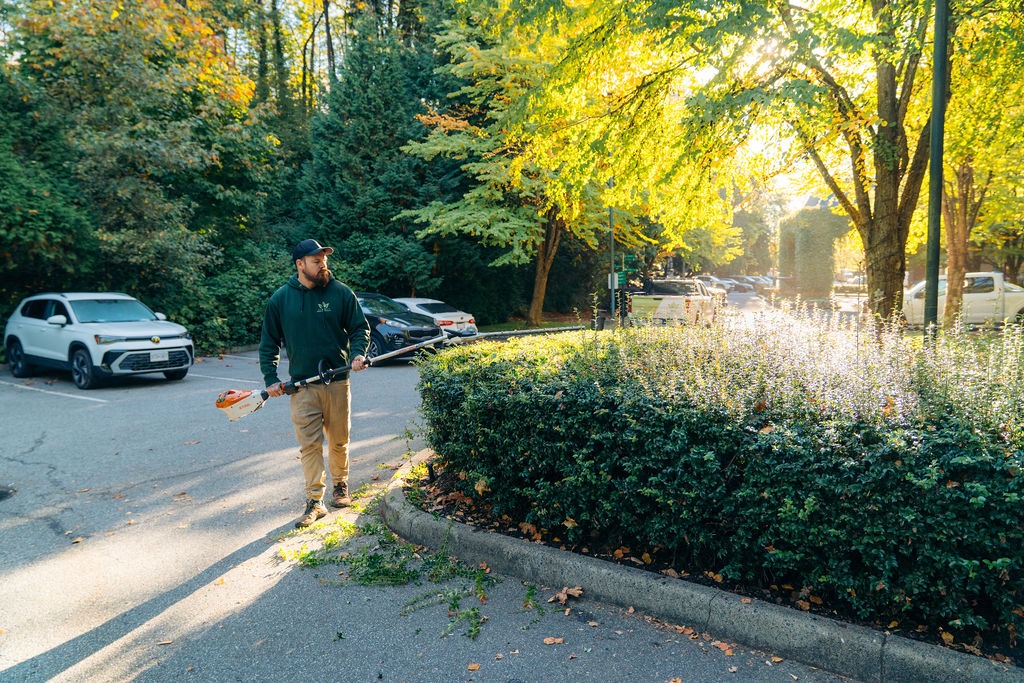
A lawn mowing service is reactive: someone shows up, cuts the grass, and leaves.
A commercial maintenance contract is proactive: scheduled, documented, and accountable to a defined scope.
The two get confused constantly, and the confusion costs property managers real money and real headaches.
Elements of a Proper Maintenance Agreement
A proper commercial maintenance contract starts by defining service intervals clearly and laying out a scope matrix of exactly what’s included at each visit. It should also build seasonal planning into the schedule, rather than treating each weather shift as a surprise.
A strong agreement should also include a clear escalation procedure for when something goes wrong, alongside a review mechanism to adjust the contract as the property’s needs change.
Common Mistakes When Hiring
The most common mistakes property managers make when selecting a commercial contractor are predictable:
- Choosing on price alone without checking what’s actually included
- Not verifying WorkSafeBC clearance before signing
- Failing to define scope clearly up front
- Not asking about crew stability or turnover history.
Addressing these points during your vetting process is the easiest way to secure a reliable, long-term partner who gets the job done right the first time.
Strata Legislation and Council Duties
There’s a regulatory dimension worth noting for strata-adjacent properties. Strata corporations in BC are governed by the Strata Property Act, and councils carry a legal duty to manage common property responsibly. A maintenance contractor who understands that regulatory context, and can speak to it directly with a council or property manager, is worth more than one who treats every property the same regardless of its governance structure.
What to Look for at Renewal Time
The difference between a proactive maintenance contract and a basic mowing service matters most at renewal time, when a property manager is deciding whether to stay with an existing contractor or put the account out to tender again.
A contract built around clear intervals and a documented scope matrix gives a property manager something concrete to evaluate:
- Did the contractor hit the agreed frequency
- Did the scope match what was billed
- Were issues escalated and resolved the way the contract described.
A reactive lawn mowing arrangement gives a property manager nothing to evaluate beyond “the grass mostly got cut,” which is a poor basis for a renewal decision on an account that may represent a meaningful annual spend.
Seasonal Maintenance on the North Shore: What Changes Quarter to Quarter

North Shore properties don’t require the same maintenance year-round, and a contractor who treats every month like every the same is simply mismanaging your site.
Here is how a realistic, season-by-season commercial maintenance scope breaks down on the North Shore:
Spring (March–May): Irrigation system start-up, fertilization, clean-up of accumulated winter debris, and hedge shaping after the spring growth flush. North Shore springs run wet and cold, and moss control is frequently necessary on shaded turf during this window.
Summer (June–August): Mowing frequency peaks, and irrigation monitoring becomes critical, particularly when Metro Vancouver water restrictions move through Stage 1 to Stage 3. A knowledgeable contractor plans around those restrictions rather than getting caught out by them. Heat stress management on turf and regular deadheading and bed maintenance round out the summer scope.
Fall (September–November): Leaf management is intensive on North Shore commercial sites given the density of deciduous trees across the district. For a deeper look at fall-specific work, see our existing guide on fall clean-up and seasonal prep. Irrigation winterization typically happens between October and November.
Winter (November–March): Snow and ice management is less frequent than in most of Canada, but severe when it hits. Salting and plowing require close coordination with site management to keep walkways and parking areas safe and accessible.
The through-line across all four seasons is that North Shore maintenance isn’t a fixed monthly service, it’s a program that shifts scope and frequency as conditions change. A contract written around a flat, year-round visit schedule doesn’t hold up against a district where spring moss, summer irrigation restrictions, fall leaf volume, and winter ice each demand a different response. Property managers who’ve dealt with a contractor that treats every month the same way usually notice the gaps first in October and November, when leaf accumulation on a North Shore site can outpace a maintenance schedule built for a drier, lower-canopy property elsewhere in the region.
Getting Started: How to Request a Commercial Maintenance Assessment
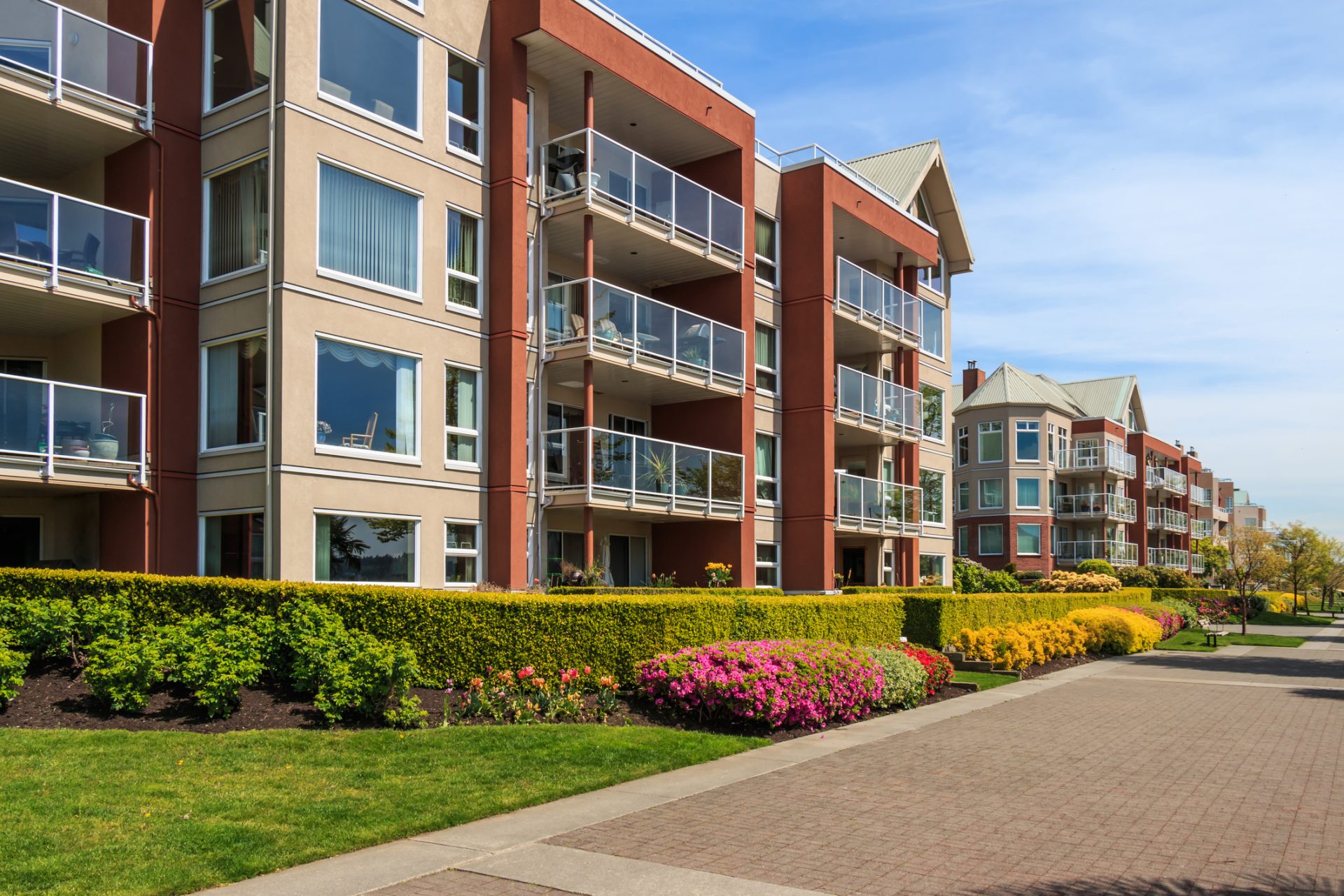
There is no cost or commitment attached to our initial assessment. This is usually enough time to walk the property, review your existing scope of work, flag anything currently being missed, and give you a realistic sense of what a properly scoped program would look like and cost before any decisions are made.
To help us prepare, it is useful to have a few details ready when you reach out:
- Your property address and site map
- A copy of your current contractor’s scope of work (if you have one)
- Your target start date
Once you contact us, we will schedule your site visit, propose a customized scope based on what your property actually needs, and provide clear pricing with no obligation attached.
Our Service Area & Services
Eco Property Maintenance provides reliable commercial property maintenance across North Vancouver, West Vancouver, Burnaby, Richmond, Coquitlam, Langley, Abbotsford, Chilliwack, and the surrounding regions.
Ready to get started? Request a commercial maintenance assessment by calling 778-886-3458 or send a message through our contact form.
Summary
Commercial property maintenance in North Vancouver demands more than a standard lawn crew; it calls for a local partner company that understands North Shore rainfall, slope drainage, and dense tree canopy. This guide breaks down what real commercial property maintenance services include, from grounds care and irrigation to snow removal and seasonal clean-ups, and what separates a proactive maintenance contract from a reactive mowing visit. It covers what property managers should check before signing a contract with any property maintenance company, and explains how strata and commercial maintenance responsibilities intersect on mixed-use sites. This guide also details how Eco Property Maintenance partners with General Contractors (GCs) and developers, and walks through North Shore seasonal maintenance quarter by quarter. It closes with a clear next step: how to request a commercial maintenance assessment.
Tags: